



Osteoporotic Pertrochanteric Femur Fracture: Successful Surgical Management
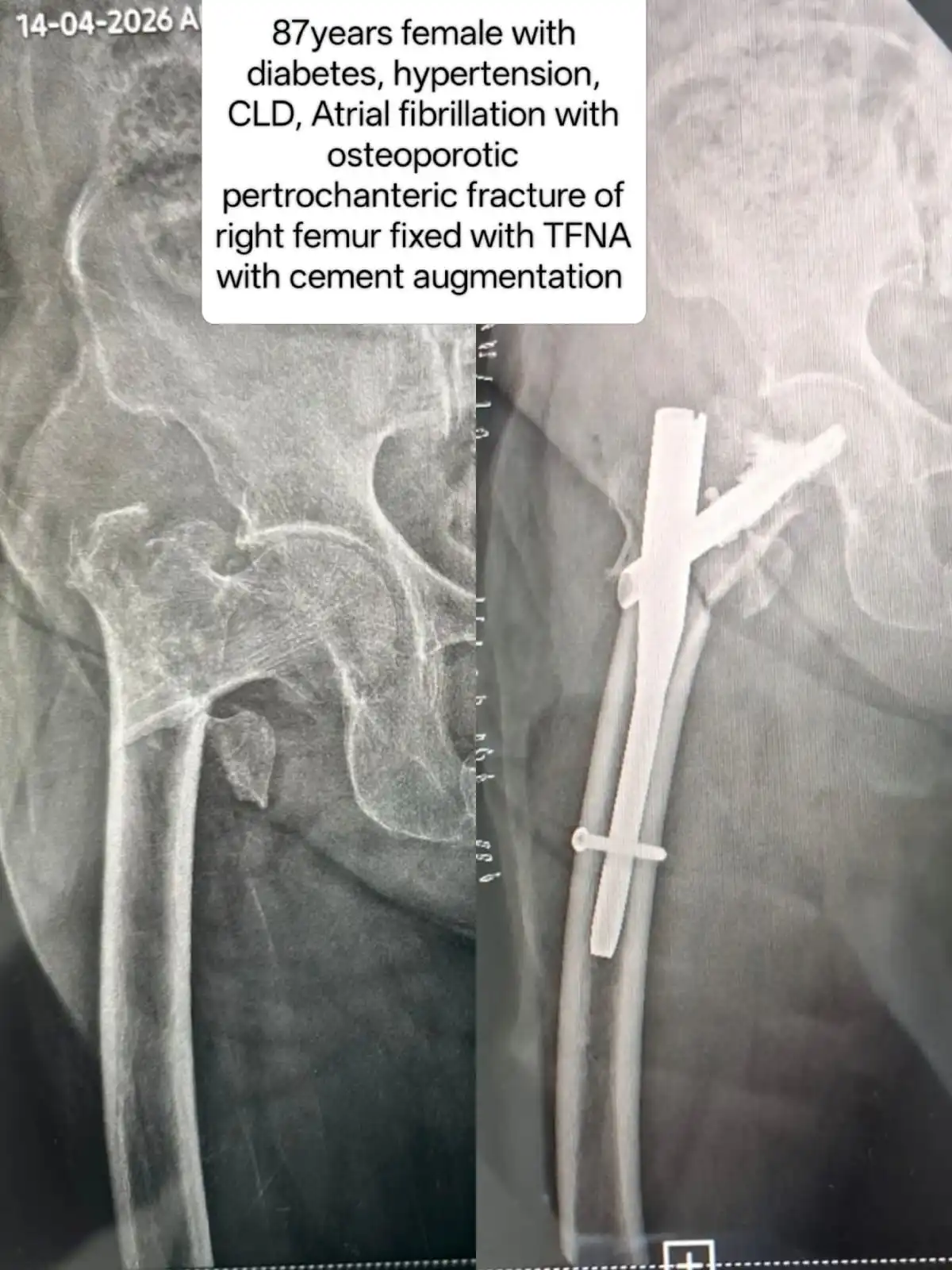
At Vyom Ortho Care, we treated an 87-year-old female patient with multiple comorbidities, including diabetes, hypertension, chronic liver disease, and atrial fibrillation. She sustained a trivial fall at home, following which she developed severe pain in her right hip and was unable to bear weight on the affected limb.
On presentation, she had:
Severe pain in the right hip
Inability to stand or walk
Restricted movement of the right lower limb
A detailed clinical examination and X-ray imaging confirmed a pertrochanteric fracture of the right femur, a common fragility fracture seen in patients with severe osteoporosis.
Given her age and complex medical background, a multidisciplinary evaluation was conducted involving a physician, cardiologist, and anaesthetist to optimise her condition prior to surgery. Early surgical intervention was planned to reduce the risks associated with prolonged immobilisation.
Surgical Management and Rehabilitation Approach
The patient underwent Closed Reduction and Internal Fixation (CRIF) with TFNA (Trochanteric Femoral Nail Advanced) along with cement augmentation for enhanced stability in osteoporotic bone.
The procedure was completed successfully, and the patient tolerated it well without complications.
Post-operative care focused on early mobilisation and prevention of complications:
Walker-assisted mobilisation initiated on post-operative Day 1
Continuous monitoring of vital parameters and comorbid conditions
Adequate hydration and nutritional support
Prevention of deep vein thrombosis and infections
Breathing exercises to avoid pulmonary complications
Gradual progression of weight-bearing as tolerated
Outcomes and Long-Term Care
The patient showed excellent recovery in the immediate post-operative period and achieved early mobilisation an essential factor in elderly fracture management.
With structured physiotherapy and medical support, she began regaining confidence in walking and performing daily activities.
Long-term care recommendations included:
Regular physiotherapy to improve strength and mobility
Strict management of osteoporosis with medications, calcium, and vitamin D
Fall prevention strategies and home safety modifications
Ongoing monitoring of her medical comorbidities
Conclusion
This case highlights the importance of timely surgical intervention, multidisciplinary care, and early rehabilitation in managing osteoporotic fractures in elderly patients with multiple comorbidities.
Despite significant health challenges, the patient was mobilised within a day of surgery, demonstrating that with the right approach, even high-risk patients can achieve good functional recovery and improved quality of life.
Explore our services for better mobility and lasting relief