



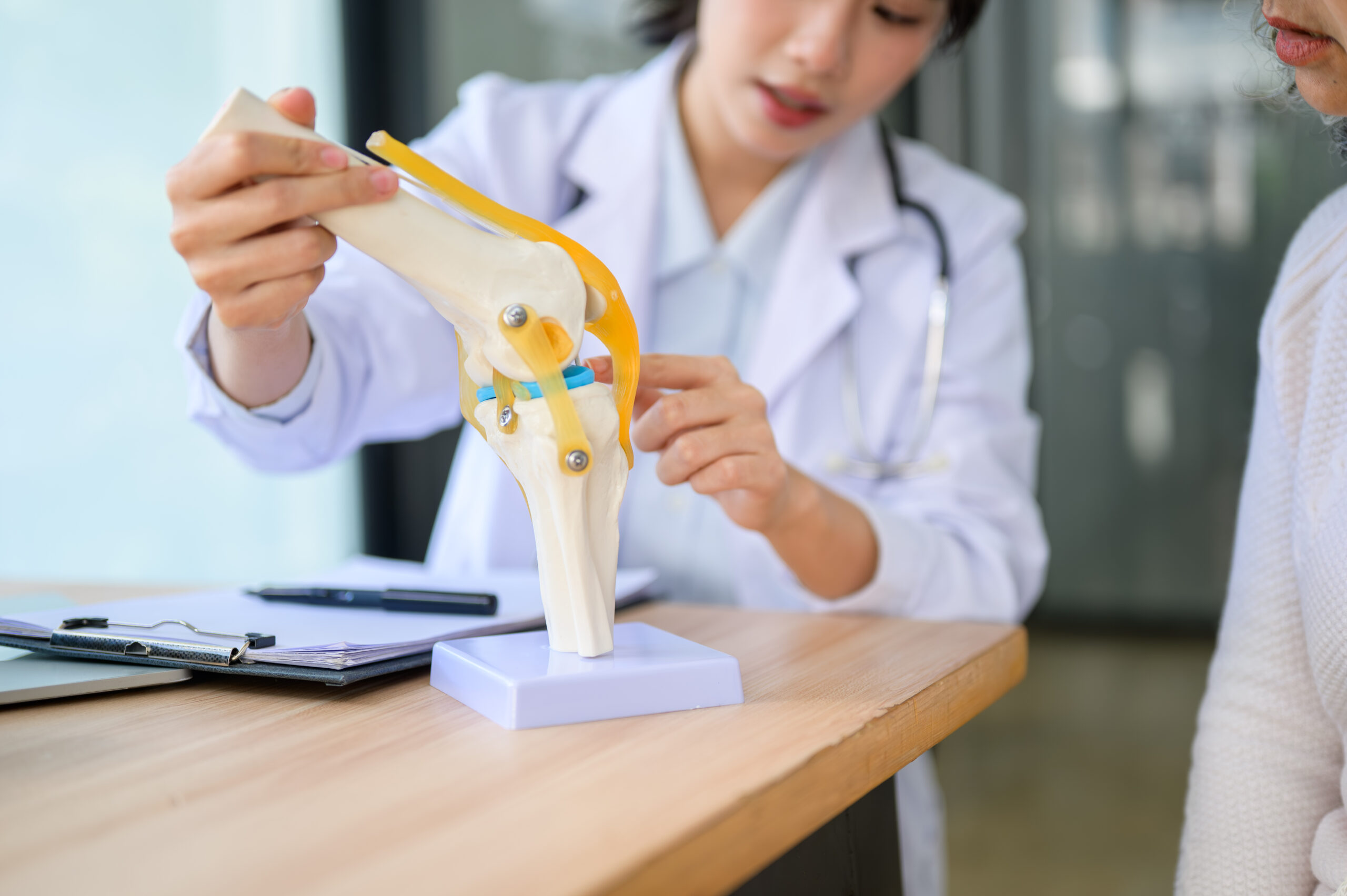
Undergoing total knee arthroplasty (TKA) is a transformative medical milestone engineered to relieve chronic arthritic pain and restore fluid operational mobility to an otherwise compromised musculoskeletal system. Every year, thousands of patients choose advanced, world-class healthcare centres for knee replacement surgery in Bangalore, leveraging cutting-edge robotic navigation, highly durable implant designs, and minimally invasive subvastus surgical techniques. However, a common misconception among patients is that the final clinical outcome is entirely decided in the operating theatre. In reality, the true long-term success of a joint replacement relies heavily on a meticulous, biomechanically sound, and highly disciplined post-operative recovery phase. The initial weeks following hospital discharge represent a critical physiological window where the surrounding soft tissues, ligaments, and muscle groups must properly adapt to a newly aligned artificial prosthetic implant.
Unfortunately, many patients unknowingly commit critical errors during their home-based convalescence that severely jeopardize their ultimate clinical outcomes. Subtle missteps in movement mechanics, poorly structured activity pacing, or missing professional therapeutic milestones can lead to chronic scar tissue accumulation, permanent joint contractures, or even mechanical implant loosening. To achieve a perfectly stable, pain-free joint, you must understand the underlying structural mechanics of recovery. In this definitive clinical guide, curated with insights from the best knee replacement surgeon in Bangalore, we break down the five most dangerous mistakes to avoid after knee replacement surgery and show you exactly how to protect your investment in your personal mobility.
ne
1. Prolonged Sitting with a Bent Knee & Improper Leg Elevation Mechanics
One of the most frequent and structurally damaging mistakes patients make in the early post-operative phase is keeping the operated knee in a consistently bent position while resting. It is completely natural to seek a slightly flexed position because it relaxes the surrounding joint capsule and temporarily minimises sharp surgical pain. Patients often place a soft pillow directly underneath the crook of the knee while sitting in a chair or resting in bed. While this offers brief comfort, it creates a highly hazardous biomechanical environment that can result in permanent physical limitations.
When a healing knee is left in a bent state for hours at a time, the aggressive scar tissue formed during cellular recovery begins to tighten and solidify around the flexed joint capsule. This rapid tissue remodeling can lead to a severe clinical complication known as a flexion contracture. A flexion contracture prevents the patient from fully straightening their leg out to a true 0-degree angle. If you lose full terminal extension, your entire gait cycle becomes asymmetrical.
Walking with a slightly bent knee places a massive, unnatural mechanical workload on the quadriceps muscle group and increases patellofemoral contact forces, causing chronic anterior knee pain and accelerating mechanical wear on the polyethylene articular liner. To ensure a structurally sound recovery, top centers for knee replacement rehabilitation in Whitefield enforce strict resting rules: the knee must be kept perfectly straight when elevated. When elevating your leg to control post-surgical swelling, always place pillows under your calf and ankle, leaving the space directly beneath the knee completely unsupported. This utilises gravity to naturally stretch the posterior joint capsule, preserving your crucial terminal extension
2. Abandoning Assistive Devices Prematurely Due to Social Pressures
It is incredibly common for active individuals to experience social anxiety or impatience regarding their use of walkers, crutches, or walking sticks. Many patients view these tools as signs of dependency or physical frailty. As a result, they try to abandon their mobility aids just days after returning home to neighbourhoods like Koramangala or Indiranagar. This premature transition away from assistive devices is a dangerous error that can severely damage a newly implanted knee joint and trigger compensation injuries across the kinetic chain.
During the initial six weeks following a knee replacement surgery in Bilekahalli, the deep periarticular muscles—especially the quadriceps femoris and gluteus medius suffer from severe post-operative inhibition and weakness. When you discard a walker before these muscle groups have regained sufficient structural capacity, your body shifts its weight aberrantly to protect the weak limb. This manifests as a distinct, uncoordinated limp, known pathologically as an antalgic gait.
Walking with an unassisted limp subjects the artificial knee components to severe eccentric loading patterns, causing accelerated bone-implant interface stress and significantly increasing the long-term risk of aseptic loosening. Furthermore, a premature transition to independent walking drastically increases your risk of catastrophic falls. A sudden trip on unpaved local terrain can lead to a periprosthetic bone fracture around the metallic tibial or femoral components, requiring complex, painful revision joint surgery. Clinical experts at leading orthopedic clinics in Jayanagar suggest that you should only transition from a walker to a single walking stick—and eventually to unassisted walking—when you can comfortably execute an independent straight-leg raise and maintain perfect postural alignment without any lateral shifting of the pelvis
3. Misinterpreting the Subtle, Indolent Indicators of Low-Grade Periprosthetic Infections
When patients think of a post-surgical infection, they usually imagine obvious, high-grade clinical presentations: a high fever, severe red streaks spreading across the thigh, or foul-smelling pus actively draining from the surgical incision. While acute, high-grade infections certainly occur and demand emergency surgical debridement, a far more insidious threat is a low-grade periprosthetic joint infection (PJI). Missing or misinterpreting the subtle, low-grade signs of an unhealed joint capsule is a catastrophic mistake that can result in total implant failure and the loss of healthy local bone stock.
Low-grade infections are typically driven by less aggressive, biofilm-forming bacteria such as Staphylococcus epidermidis or Cutibacterium acnes. These pathogens slowly build a protective matrix around the metal and polyethylene components, rendering standard oral antibiotics completely ineffective. The clinical presentation of a low-grade PJI is highly subtle: the knee simply remains uncharacteristically warm to the touch, presents with a mild but persistent dull ache at rest, and displays a stubborn, non-yielding stiffness that limits your range of motion despite intensive physiotherapy.
Critically, scientific studies indicate that up to one-third of confirmed low-grade PJIs present entirely normal serum C-reactive protein (CRP) and erythrocyte sedimentation rate (ESR) levels. Therefore, assuming your joint is completely healthy just because your blood tests are clear is a massive error. If your operated joint remains exceptionally warm, stiff, or swollen beyond the first six to eight weeks, you must immediately see a specialized orthopedic doctor in Jayanagar for a comprehensive assessment, which may include a joint fluid aspiration to rule out deep bacterial colonization before a mature, indestructible biofilm takes hold.
4. Poorly Managed Multi-Modal Analgesia Leading to Rehabilitation Deficits
Achieving an exceptional range of motion after total knee arthroplasty requires a delicate, perfectly synchronised balance between effective multi-modal pain management and aggressive physical rehabilitation. Unfortunately, a major mistake among recovery patients is the improper management of prescribed pain medications. This error typically occurs in two opposite extremes: patients who refuse to take their medications due to a fear of opioid dependency, and those who over-medicate to completely eliminate discomfort, leading to dangerous over-exertion.
The group that completely avoids pain medications often suffers the most severe long-term physical limitations. If you attempt to push through intensive physical therapy sessions with unmanaged, severe post-operative pain, your central nervous system triggers an involuntary defence mechanism known as muscular guarding. Your hamstring and quadriceps muscles tightly lock up to protect the joint, making it virtually impossible for your physical therapist to safely flex or extend the leg. Consequently, the critical rehabilitation window the first 6 weeks, where the joint is most malleable, is entirely lost, allowing tough, fibrous scar adhesions to permanently bind the joint capsule. This results in a frozen, stiff knee that can only be resolved through a painful manipulation under anaesthesia (MUA).
Conversely, completely masking pain can cause you to aggressively over-stretch healing ligaments, leading to acute structural micro-tears and severe localised inflammation. To optimise your outcomes, work closely with a dedicated specialist in knee replacement rehabilitation in Hulimavu. Take your prescribed analgesic medications exactly 30 to 45 minutes before your scheduled physical therapy sessions. This creates a comfortable pharmacological window that allows for maximum joint mobilisation while preventing protective muscular spasms.
5. Premature Progression to High-Impact Recreations and Structural Overloading
Modern knee implants are highly sophisticated feats of biomedical engineering, capable of replicating natural joint kinematics with incredible accuracy. Because modern joints feel exceptionally stable, many patients experience a rapid surge in confidence by the third or fourth month of recovery. Feeling completely pain-free, they make the premature mistake of returning to high-impact recreational activities, such as jogging, singles tennis, heavy weightlifting, or aggressive cross-training. This rapid, unguided return to heavy loading is a primary cause of early mechanical joint failure.
While the surgical incision heals within a couple of weeks, the critical process of biological bone ingrowth—where your natural bone securely fuses with the porous metallic surfaces of the implant—takes up to a full year to achieve absolute structural stability. Subjecting the knee to high-impact running or heavy squatting forces during the first six months creates micro-motion at the bone-implant interface. This micro-motion disrupts delicate new bone formation, leading to a failure of biological fixation and resulting in early aseptic loosening.
Additionally, high-impact activities place extreme shear stresses on the modular polyethylene insert, causing micro-fragmentation, delamination, and the release of microscopic wear particles into the joint space. These tiny wear particles trigger a localized macrophage-induced inflammatory response that causes osteolysis—the progressive destruction of surrounding healthy bone. To maximize the lifespan of your new joint, shift your lifestyle toward low-impact cardiovascular exercises. Activities like stationary cycling, swimming, and controlled hydrotherapy are excellent choices that provide superb muscle strengthening and cardiovascular conditioning without subjecting your artificial joint to destructive impact forces.
FAQs
1: Why does my knee continue to feel warm and stiff 3 months after knee replacement surgery in Bangalore?
Localised warmth and mild operational stiffness are perfectly normal components of the tissue-remodelling inflammatory process for up to 3 to 6 months. However, if this warmth is accompanied by a persistent dull ache, a sudden reduction in flexional range, or an inability to progress during physical therapy, it could indicate a low-grade periprosthetic joint infection (PJI). You should immediately consult a specialised orthopaedic doctor in Bannerghatta Road, Bangalore to rule out deep bacterial colonisation, even if routine serum blood tests show normal results.
Q2: What happens if I accidentally force my knee to bend too much during the initial two weeks?
Controlled flexion under the strict supervision of a trained physical therapist is highly beneficial. However, uncontrolled, aggressive forced bending at home can cause structural micro-tears in the healing quadriceps tendon or disrupt the surgical incision stitches, leading to wound dehiscence. Always perform your range-of-motion exercises in a smooth, progressive manner, avoiding sudden, forceful impacts.
3: Exactly how long should I continue using a walker after total joint arthroplasty?
Most patients require a standard front-wheeled walker for approximately 2 to 4 weeks, followed by a transition to a single walking stick for an additional 2 weeks. This timeline should never be rushed based on social pressure. You are ready to safely abandon your assistive device only when your quadriceps are strong enough to support an independent straight-leg raise, and you can walk with a normal gait pattern without a visible limp.
Q4: Can a severe flexion contracture be corrected if I made the mistake of resting with a bent knee?
Yes, if detected early (within the first 6 to 12 weeks), a flexion contracture can often be corrected through aggressive physical therapy, specialised hamstring stretching, and dynamic extension splinting. However, if left unaddressed for several months, the scar tissue solidifies completely, and a surgical procedure known as an arthroscopic arthrolysis or manipulation under anaesthesia (MUA) may be required to restore a straight leg.
5: What are the safest low-impact cardiovascular exercises to maintain long-term physical fitness?
The safest and most effective low-impact exercises include stationary cycling (with zero resistance initially), swimming, water aerobics, and guided walking on flat, even indoor tracks. These exercises provide excellent cardiovascular conditioning and strengthen the surrounding quadriceps and hamstrings without subjecting your new joint to the destructive impact forces of running or jumping.